
The Dental Place

How do I care for my dentures?

September 4, 2012

Dentures are a cost-effective and popular solution to the problem of missing teeth. Dentures help to stabilize surrounding teeth, provide support to the bite and help retain confidence in a person’s smile.

Dentures, like your other teeth, require regular care in order to keep them in good condition, and your dentist can help in this regard, providing advice on how to care for your dentures. A good level of care helps to maintain healthy teeth and mouth, as well as prolonging the longevity of the prosthetic.

The first thing to remember about caring for your dentures is not to handle them needlessly; and on those occasions when you do have to handle them, such as removing them or putting them in, care should be taken not to drop them. Wherever possible, stand over a sink or other receptacle with a folded towel or other cushioning item, or even a sink full of water when placing or removing dentures. Should you then drop your dentures, at least there is an impact cushion that should help limit or negate any impact damage that might occur. 

Dentures, like your other teeth, require regular care in order to keep them in good condition, and your dentist can help in this regard, providing advice on how to care for your dentures.

Like natural teeth, dentures attract plaque and so must be cleaned and brushed regularly in order to remove food debris and other matter that might coat the dentures or the denture plate. This can also help prevent staining of the denture. Brush using a soft-bristled brush designed specifically for dentures, ensuring you clean all surfaces while taking care not to damage the denture attachments. If you can, rinse your dentures after every meal.

When not being worn, place dentures in a solution to soak. This gives your mouth an opportunity to rest, while the cleansing action of the solution helps to remove any plaque or food debris from the dentures. Before replacing your dentures, brush and clean your mouth and tongue to remove bacteria.

Soaking dentures also helps dentures to remain pliable and so preserve their shape. Dentures that become warped may not offer a comfortable fit, or may feel loose when worn. Repairs to dentures should not be attempted; instead, speak to a dentist who will handle the required repairs, or if needed, take the necessary steps to replace dentures.

For more tips on how to care for you dentures, contact our knowledgeable and professional dental team serving Arlington TX today.
Financing Cosmetic Dentistry Treatment

August 28, 2012

cosmetic dentist Grand Prairie

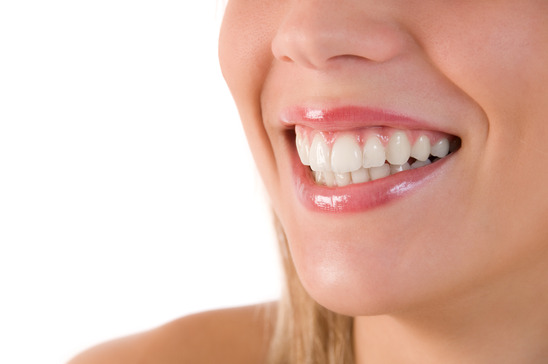
Cosmetic dentistry seeks to provide patients with a range of treatments designed to reconstruct a person’s smile, perhaps through the use of dental implants, or enhance an existing smile through treatments such as teeth whitening.

Cosmetic dentists offer a range of treatments to their clientele. Although each dentist will offer slightly different treatments, almost invariably they share a common goal: to provide the patient with the best dental care possible, at a price they can afford.

Unfortunately, due to the technologies involved, certain cosmetic dentistry procedures can be a bit pricey and so many people who want specific treatments and results may exclude themselves due to a financial restriction.

Dental insurance may, in some instances, provide coverage for some or all of the treatments a patient requires. This is, however, dependant on the type of coverage afforded by the insurance provider. Not all procedures will be covered through a dental insurance policy, and there may be restrictions placed on certain treatments.

Cosmetic dentists recognize the need for patients to be satisfied with their smile, and so seek to make treatment as affordable as possible by offering patients the option of paying for their dental care through forms of credit agreements, such as those offered by Care Credit and CitiHealth, which offer low or interest-free repayment plans for a range of cosmetic dentistry treatments.

Of course, there are other options for patients seeking to finance their dental transformation; some will turn to a bank in order to arrange a personal bank loan, while others will perhaps use a credit card. While both methods are perfectly acceptable, the interest charged on either is often much higher than that offered through a dedicated dental care financier.

Whatever the treatment a patient requires in order to restore their confidence in their smile, financial barriers needn’t be an exclusion to seeking out the right treatment and achieving the desired results; and a discussion with our skilled and dedicated team to discuss the range of options available can go a long way to developing a financial strategy for a winning smile.

Contact The Dental Place in Grand Prairie TX at 972-264-5795 for more information and to schedule your consultation.

The History of Dental Implants

August 17, 2012

Dental implants are a permanent solution to restoring lost teeth, and have become a common treatment performed by implant dentists in recent years. However, the treatment can be traced back hundreds of years, where tooth replacements were performed as long ago as the Ancient Egyptian era.

There is historical evidence to suggest that the Ancient Egyptians would fashion replacement teeth out of seashells that were then placed into the gums. The minerals found in seashells, would in some instances, bond with the jawbone.  Throughout history, civilizations have found ways to replace lost teeth, including scavenging the remains of cadavers and placing those teeth into their own mouths.

However, the accepted modern practice of dental implants didn’t come about until 1952 when a Swedish orthopedic surgeon, Dr Per-Ingvar Brånemark, discovered that titanium placed in a rabbit’s femur had bonded successfully with the animal’s bone tissue to such an extent he was unable to remove the metal. Further research concluded that titanium could, in fact, be used to structurally join with living bone tissue; he called the process ‘osseointegration’. 

Dental implants are a permanent solution to restoring lost teeth, and have become a common treatment performed by implant dentists in recent years.

It was in 1965 that saw the emergence of the first proper dental implants; a small titanium rod that an implant dentist would place into the gum tissue of the patient and capped with a prosthetic covering.  After many successful years of research, Brånemark published his findings and in 1978, dental implants became a commercialized commodity that would be available to everyone as a method of restoring lost teeth.

The process of dental implantation involves a dental surgeon placing a small titanium rod into the patient’s gum tissue, and following a period of osseointegration, affixes a prosthetic dental crown made from porcelain on top of the titanium rod to produce a natural looking dental replacement that behaves in much the same way as a regular healthy tooth.

Such is the popularity nowadays of dental implants that more than seven million procedures have been successfully implemented.

If you are in need of a tooth replacement solution in the Arlington TX area, contact The Dental Place to learn how we can help.


Teeth Whitening: Is it really possible to have a brighter smile?

August 6, 2012

teeth whitening Grand Prairie

For anyone with a smile that looks tired and jaded, tooth whitening is a possible solution. However, a common question always seeks to be answered: is it really possible to have a brighter smile with teeth whitening?

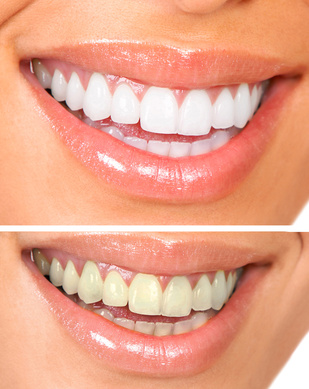
Ask any cosmetic dentist and the answer will be yes, teeth whitening can brighten your smile and restore a tired, discolored smile back to its natural brilliance. Depending on the severity of the staining, a range of tooth whitening solutions exist to deliver the results you want.

For minor staining, for example, that exists on the tooth’s enamel, specially formulated toothpastes may be sufficient to treat staining and brighten teeth. However, toothpastes’ effect is gradual, and it may take several weeks before the desired results are achieved.

Tooth whitening kits are a popular choice, and these can be bought over-the-counter in most drugstores or through a cosmetic dentist. Drug store kits are often a generic nature, with a one-size-fits-all tooth tray and a ready-mixed bleaching solution that may or may not produce the desired result.

By comparison, teeth-whitening kits supplied by a cosmetic dentist will be much more customised, with a proper-fitting tooth tray and a bleaching solution that has been formulated by the dentist to achieve the desired results both at home, or in the dentist’s office.

Available only from a cosmetic dentist, the Opalescence teeth whitening system, for example, is one that is designed to be performed both at-home, on the move, and in the dental office.

Opalescence teeth whitening system is a gel-based treatment that is administered via a customised bleaching tray and is available in a range of strengths to treat even the most stubborn staining, with fast, effective results.

For those who want to whiten their teeth on the move, Opalescence can be supplied in prefilled disposable packs in a range of flavours to taste. On-the-go treatment is fast, with a typical treatment of around one hour, once a day yielding noticeable results in just one week.

And, for those who seek a quick fix, in-office Opalescence treatment uses a unique chemical formula that isn’t reliant on heat or light to activate its special properties, and provides noticeable results in around one hour. And with potassium nitrate and fluoride as part of its composition, not only will it whiten teeth, but also strengthen them as well.

For more information and to learn how you can benefit from teeth whitening, contact our Grand Prairie dental office at 972-264-5795 and schedule your professional consultation today.

How successful is a root canal treatment?

July 27, 2012

The purpose of a root canal is to clean out infection that has penetrated the root base of a tooth. The goal is to save the tooth and prevent the infection from spreading resulting in an abscess that can produce great discomfort and possibly spread to other parts of the body.

Without a root canal, the likelihood of salvaging the tooth is minimal if infection is present.

With a root canal, the dentist will seal the entire mouth to isolate the tooth being treated. This keeps the area dry and allows the dentist to remove all of the diseased particles to prevent them from spreading to other parts of the mouth or accidentally swallowed.

An instrument is used to reach the spaces that house the nerves in the root of the tooth. This instrument will grab the nerve of the tooth and remove it. Medication is placed in the tooth to clear up any residual infection and to seal the tooth until the final restoration is applied.

Once the nerve and infection are treated, the tooth is usually still viable. A final restoration in the form of either a composite filling or a crown will cover the tooth. The tooth being treated usually dictates what type of restorative treatment is needed after the root canal.

There are many circumstances that can occur that might result in a root canal. Dental decay that has gone unchecked can allow bacteria to penetrate the tooth resulting in infection. A crack in a tooth can be negligible to the naked eye, but big enough to result in infection. Trauma to a tooth can result in a needed root canal right away, or the problem can slowly develop over time.

Without a root canal, the likelihood of salvaging the tooth is minimal if infection is present. It is important to do whatever is possible to save a tooth. Many might just want to pull a tooth rather than work to save it, but saving a tooth is always preferable to losing a tooth.

Once a tooth has been lost, failure to replace a lost tooth with either a dental implant or a prosthetic device can impact eating, speaking, and smiling; quality of life can be affected due to dietary changes or loss of self-confidence.

A successful root canal can ultimately save extensive costly dental work, but more importantly can bring relief from the discomfort of an infected tooth.

If you think you are in need of a root canal, or simply want more information about the treatment process, call The Dental Place, serving Arlington Texas and neighboring areas, today to schedule an appointment.

Treatment Options to Improve Smile Symmetry

July 17, 2012

 veneers Arlington TX

A smile can reveal much about a person. A big bright smile exudes self-confidence, but for many the condition of their teeth may inhibit offering a big smile. Everyone desires straight, white teeth and thanks to dental veneers that new smile is possible.

A consultation with your cosmetic dentist will provide information to treat and repair many dental imperfections.

Veneers Can Enhance Imperfections
  • Stained teeth – Teeth can become stained for many reasons. Some medications can stain the teeth. Coffee, tea, wine and soda stain; smoking and tobacco use stain; advanced age can result in a dulling of dental enamel that results in drab teeth coloration.
  • Wear and tear – Teeth can become worn down and appear uneven over time.
  • Chipped teeth – It is not uncommon for a tooth to break or chip and this small malady can produce the urge to stop smiling.
  • Occlusion – When the bite is not correct, this might result in crooked teeth.
  • Gaps between teeth – Unsightly spaces between teeth appear to close in just a couple of dental visits.

How can one specific treatment be the answer for all of these problems? That’s the beauty of veneers. Veneers are very thin, tooth colored shells that cover dental imperfections. They are made to match the shape and shade of surrounding teeth making them virtually undectable.

You can correct one or several teeth with dental veneers. Your cosmetic dentist will prepare the teeth requiring correction and take dental impressions. The dental lab will fabricate your veneers to the specifications provided.

On the big day, placing the veneers is a relatively simple procedure. A small amount of enamel has been removed from the teeth so that when the veneer is placed the enamel lost is somewhat comparable to the thickness of the veneer.

Your cosmetic dentist will work with the veneers trying them on until they appear perfect. When you and your dentist are satisfied, they will be permanently cemented in place. You now have the perfectly symmetrical smile that you always dreamed about.

To learn more about the benefits of veneers, contact The Dental Place, serving Arlington and surrounding areas, at 972-264-5795 to schedule your consultation.

What Protection Does a Custom Mouthguard Provide?

July 7, 2012

Any activity that presents an opportunity for injury, whether it is due to work or play, may suggest wearing a custom mouthguard that offers unique protection. While generic mouthguards are available at your local drugstore, these generally do not offer a comfortable fit or the needed protection you can obtain with a customized mouth guard fitted specifically for you by your dentist.

The Under Armour Performance Mouthwear™ is fitted by your dentist in approximately twenty minutes.

A mouthguard that offers the maximum protection is critical particularly when you are trying to protect the teeth of a growing child or teen. The Under Armour Performance Mouthwear™ is fitted by your dentist in approximately twenty minutes. In addition to the superb protection to teeth and the soft tissues of the mouth, serious athletes are looking at this product developed by Bite Tech, Inc. to improve athletic performance.

Wearing the “Under Armour Performance Mouthwear™ relieves pressure on the temporomandibular joint. It also helps to prevent excessive production of performance sapping hormones. Athletes in both contact and non-contact sports are turning to this not only for protection, but for additional benefits received.

If you are skeptical about how a mouthguard can enhance physical performance, try to power through a workout without any type of mouth protection. You will likely find yourself clenching and biting down as you move through your exercise. This convenient new technology not only can protect your teeth, but keeps your jaw and teeth in a more relaxed position allowing a better flow of oxygen. In addition, cortisol production is reduced by allowing less stress on your body and better performance is the result. However, for many, the primary goal with any mouth guard is to protect the wearer from injury.

There are a variety of injuries one should anticipate, particularly when playing a contact sport.

  • Getting one or more teeth knocked out.
  • Soft tissue damage from biting the tongue, cheeks or lips.
  • A well-fitting mouth guard can offer protection to the jaw and areas surrounding the mouth.

Your dentist can educate you on the importance of the protection derived from wearing a mouthguard. And now your dentist can also explain how the “UnderArmour Performance Mouthwear™ may enhance your performance at work or play.

With so many options available, we can help you choose the perfect mouthguard that will give you the best fit and advanced protection. Contact The Dental Place in Grand Prairie Texas to schedule a one on one consultation.

Complete vs. Partial Denture

June 28, 2012

dentures Arlington TX

An adult that has sustained tooth loss from dental decay, trauma or disease has many options. Based on the number of teeth lost, dentures make the perfect solution.

With the loss of one or a couple of teeth, a partial denture is made to match the shape and shade of the remaining natural teeth. Those remaining abutment teeth are used to hold the partial in place.

If replacing an entire arch, a complete denture will serve as the best option. A wax model of what your denture will look like will be made up by your dentist to select the most natural look for you, and a dental lab will fabricate the denture from the model.

Whether or not you are receiving a complete or partial denture, your dentist will fit you with a temporary restoration until your denture is made. When your denture is ready, you will likely need a couple of visits to the dentist as adjustments might be needed to make the denture look and feel as natural and comfortable as possible.

With tooth loss, over time the gum tissue sustains bone loss resulting in a natural shrinkage of the gum tissue. This might require additional adjustments to maintain the best fit of your denture.

Caring for your denture is somewhat different than caring for your natural teeth. Using a soft bristle brush and the recommended cleaning product will keep your denture looking its best. Using a firm brush and toothpaste can damage the surface of your denture. Never make adjustments to your denture on your own as this can weaken the metal clasps on your partial denture.

When not being worn, a denture should be kept moist. There are products available to soak and store your dentures. Never boil or bleach dentures. Boiling can warp the denture and bleaching can turn the gum colored portion of your denture from a natural pink to white.

Taking special care of the gum tissue under your denture is important. Any remaining teeth should be brushed and flossed carefully each day before putting in your denture. Keeping gum tissue healthy will allow the best and most comfortable fit for your denture.

Seeing your dental provider consistently for a professional cleaning and exam will help you keep your denture and remaining teeth healthy for many years.

If you would like more information on the difference between complete and partial dentures, contact our office serving Arlington TX at 972-264-5795 today to schedule a consultation.

Eat the Foods You Want With Dental Implants

June 18, 2012

When a person experiences the loss of one or more teeth, the reality of not being able to eat certain foods is very difficult. Thanks to dental implants, you can regain the ability to eat the foods you love and resume the normal lifestyle you enjoyed before tooth loss.

You can resume eating the foods you love. Continued excellent dental hygiene habits will allow a lifetime of smiles.

A consultation with your implant dentist will confirm if you are a candidate for dental implants.

  • Good overall health. Your dentist will discuss any health issues that might interfere with the implant process such as immune diseases like diabetes. Certain precautions must be taken to be sure the patient has an excellent prognosis for a successful implant procedure.
  • Good dental health. A thorough dental exam will be conducted including dental x-rays to be sure there is sufficient bone strength to sustain dental implants. Patients that suffer from periodontal disease might require further treatment prior to undergoing the implant procedure.
  • Commitment. The patient must be willing to commit to a dental regimen that includes daily flossing and brushing to keep the implant area clean and healthy. Since infection is a leading cause for implant failure, understanding this aspect of care is critical to success.
  • Tobacco Use. Patients that smoke will be strongly encouraged to quit before undergoing the implant process. Research has shown that smoking is another leading cause of implant failure.

The dental implant will be placed in the gum tissue where tooth loss has occurred. The implant is made from titanium which has been proven to successfully fuse to bone. During the healing process that follows, it will integrate into the gum tissue eventually acting much like the root of your natural tooth.

When healed, your dentist will complete treatment by placing a final restoration that has been fabricated to match the shape and shade of your surrounding natural teeth.  At this point, you will have restored the ability to eat, speak and smile with the confidence once enjoyed before tooth loss.

Without concerns about slippage or movement, your new implant is as close to a natural tooth as possible. You can resume eating the foods you love. Continued excellent dental hygiene habits will allow a lifetime of smiles.

To find out how dental implants can benefit your smile, contact our Arlington TX office today to schedule your appointment.

Do I Have to Live With Tooth Sensitivity

June 8, 2012

Grand Prairie dentist

Tooth sensitivity is a very common problem and can occur for a variety of reasons. There are multiple solutions to overcome tooth sensitivity and your dental office has a wealth of information to offer relief.

Understanding the origin of sensitivity and what triggers the discomfort is a good place to start. The surface of the tooth is covered by enamel. Underneath enamel lies another layer called the dentin. Simply put, when the dentin becomes exposed due to receding gums, decay or a crack in the tooth, the root of the tooth is no longer protected from the zinging sensations of hot, cold or sweet foods, as well as beverages. Even cold air might trigger a zinging response.

Preventing tooth sensitivity from occurring is optimum. Our skilled dentists, Dr. Min and Dr. Lee, may offer the following tips:

  • Use a soft bristle tooth brush. Avoid excessive pressure as over time this can lead to unnecessary wear and tear to the teeth and gums.
  • Floss daily. Plaque build-up can lead to gum disease and sensitivity; daily flossing helps keep gum tissue healthy.
  • Patients that clench or grind their teeth can cause damage to precious enamel. Wearing a mouth guard at night can help eliminate this habit.
  • Eat a healthy diet. Limiting sugary snacks and beverages will help prevent dental decay.
  • Use a fluoridated tooth paste or gel.
  • Limit the use of whitening products. Consistent use can increase the incidence of tooth sensitivity.
  • See your dentist twice per year for a professional cleaning and exam.

For patients that already deal with the problems associated with tooth sensitivity, you do not need to suffer.  Our cosmetic dentists in Grand Prairie TX may suggest the following products to offer relief that include:

  • Toothpaste, gels and mouth rinses that contain desensitizing ingredients work very well when used consistently.
  • Gum recession can lead to exposed root surfaces. Tooth colored composite resin is a filling material that can be bonded to these areas to eliminate exposure and sensitivity.
  • Fluoride varnishes and other sealers are available to seal off areas of sensitivity.

With research and advancements in dental technology, the use of laser treatment to reduce the discomfort due to sensitivity might be another option, along with other dental services in Grand Prairie. Ask your dental provider to recommend the choices that will provide the best alternative to relieve your tooth sensitivity.

If you are dealing with a tooth sensitivity issue and would like more information on how to treat it, contact our dental office in Grand Prairie TX at 972-264-5795 to schedule a consultation today.