The Dental Place

The Unique Dental Needs of Children

November 16, 2012

dentist in Grand Prairie TX

Many people believe the dental needs of children and adults are similar, but there are distinct differences between the two. One of the most important is the attitude that children may have towards a visit to the dentist.

However, while it might be natural for children – and even many adults today – to feel uncomfortable visiting the dentist, it is important to realize the benefits of doing so and the earlier on a child feels confident in visiting the dental office, the better.

The sensation of cleaning teeth should be bestowed in a child’s early years, from washing the gums gently with a damp cloth even before teeth have begun to break through the gum tissue. This helps to remove any sugars and acids that might still formulate on the surface of the gums and compromise the teeth or lead to infection of the gum tissue.

Once the teeth begin to emerge, gentle brushing with baby-formulated toothpastes can maintain the health of the teeth while helping show and teach the child the importance of brushing. Early exposure to a dentist can help build trust between the child and the dentist, and can aid in the early detection of dental issues which might be evident.

As the child gets older and teeth fully emerge, flossing can be introduced as an accompaniment to regular brushing, to remove trapped food debris from between teeth. Some dentists might recommend that flossing begin once two adjacent teeth emerge. Every child is different, and a dentist is always on hand to offer help and support in helping maintain a child’s dental health.

Dietary standards should always be monitored; it is natural for children to be attracted to sweet treats, such as cakes and ice cream, and sugary drinks. While these can be acceptable in moderation, they can lead to cavities in the child’s teeth if the sugars left behind on the surface of the teeth is not removed, and so it is always a good idea to try to encourage children to clean their teeth whenever possible afterwards, in addition to their regular dental health regimen.

A child’s early dental health is vitally important to their overall dental health later in life, and habits formed as a child can carry forward into adulthood. It is important to teach children positive practices with dental hygiene and regular dentist visits from a young age.

To learn more about the unique dental needs of your child, contact the Grand Prairie TX office of The Dental Place today at 972-264-5795 to schedule an informative consultation.

Consequences of a Single Tooth Loss

November 5, 2012

Many people experience the loss of a single tooth. For some, the loss might occur as the result of an accident; while for others, a dental extraction might have been necessary.

However, while many people may believe the loss of a tooth has no great bearing on the overall health of their teeth, in reality, this is not the case and a single missing tooth can have far-reaching detrimental effects. To combat the effects of a single tooth loss, dental implants have become a popular choice of tooth restoration.

A set of teeth typically work together as a team, offering strength and support to one another in functions such as biting, chewing and even word and sound formation. So naturally, if one tooth is removed, all are affected. Teeth can shift position, altering the biting and chewing pattern, creating pressure and leading to issues such as TMJ.  

Teeth can shift position, altering the biting and chewing pattern, creating pressure and leading to issues such as TMJ.

What’s more, the symbiotic relationship between the now-missing tooth and the gum and jawbone is broken. The stimulus provided by the symbiosis is lost, which can lead to gum tissue recession and loss of bone mass in the affected area. This recession can spread across the gum line and jaw bone, weakening other teeth and leading to further loss.

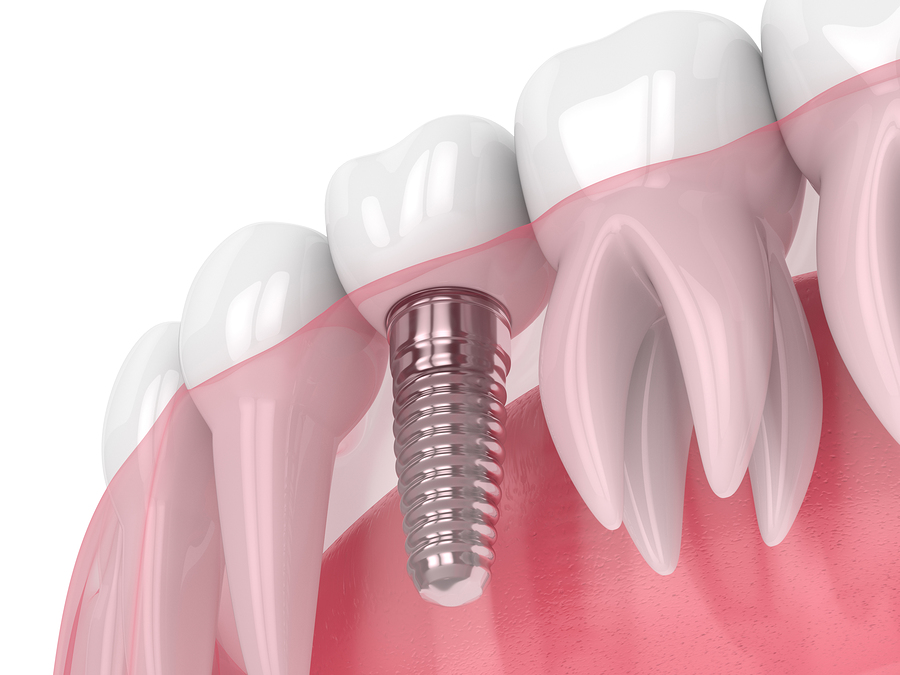
An implant dentist can use dental implants to address the issue of a missing tooth by using a prosthetic tooth to replace the one that has been lost. A small titanium support is inserted into the area of the missing tooth and allowed to bond onto the jaw bone. This binding of the two materials is known as osseointegration, and provides strength and support to the dental implant, and also helps to recreate the symbiotic relationship between the tooth, gum tissue and jawbone.

Once the pillar has been placed and the healing process is complete, the implant dentist places a shaped dental crown onto the pillar to complete the implant treatment. The dental crown provides a natural appearance to the treatment, while offering all the benefits of a normal tooth.

The dental implant helps to maintain bite strength, aid speech and word pronunciation and helps to keep gums stimulated, helping to promote healthy gums and jaw bone.

After-care is easy too, dental implants can be cared for normally as part of regular dental care and require no special cleaning aids or solutions.

If you have suffered from single tooth loss and would like to consult with our dental team about implant treatment, contact The Dental Place, serving Arlington TX and surrounding areas, today to schedule a consultation.

Dental Veneers: A Custom Cosmetic Dentistry Solution

October 25, 2012

veneers Arlington TX

Many patients dislike their dental imperfections and would do just about anything to make changes. Thanks to veneers, their new smile can become a reality in just a few brief dental visits.

A veneer is a wafer thin, tooth colored shell that is permanently cemented to teeth to correct:

  • Stain and tooth discoloration – A professional hygiene cleaning or tooth whitening session is often not enough to remove stain due to medication, over fluoridation, smoking, diet, or age.
  • Wear and tear – Years of grinding can result in uneven teeth, or just day to day pressures can add years to your appearance because of worn down enamel.
  • Misshapen teeth – Whether there are several or just one tooth out of alignment, your smile can be enhanced by covering the offending teeth.
  • Chipped or broken teeth – Veneers have been proven to be the least invasive cosmetic procedure to strengthen and improve the appearance of damaged teeth.
  • Eliminate gaps – Unsightly spaces between teeth disappear.

Who are the best candidates for dental veneers? Anyone from young adult to a senior citizen that does not suffer from periodontal disease can improve their smile.

Your cosmetic dentist will help you decide what type of veneer is most suitable for you. Then a customized plan will be designed to enhance your appearance by matching the size, contour and color of surrounding untreated teeth to make your veneers blend identically for the most natural look possible.

At that much anticipated final appointment, the dentist will remove a small amount of the enamel about the same thickness of the veneer. The dentist will check to make sure the veneers are perfect before they are permanently cemented. Small adjustments may be needed chairside for the perfect fit and appearance.

A bonding agent along with permanent cement is used to attach the dental veneers. This process, although least invasive, is still permanent and not reversible with standard dental veneers. A curing light is used to expedite the hardening process.

At the conclusion of this stage, your new smile makeover is completed. Taking care of your veneers is as simple as daily brushing and flossing and twice yearly trips to your dental provider for a professional cleaning and exam to keep your natural teeth and veneers looking their best for many years.

If you are interested in pursuing dental veneers and would like more information on the process, contact The Dental Place, serving Arlington TX and neighboring areas, today at 972-264-5795 to schedule an informative consultation.

Root Canal Therapy: Purpose and Procedure

October 16, 2012

Patients that experience a tooth that has been compromised by infection have few options. Do nothing, and run the risk of losing the tooth and spreading infection. Or opt for root canal therapy, save the tooth and eliminate the discomfort and cost of what may be needed if the tooth is lost.

For patients that choose to ignore needed treatment, the infection may lead to an abscess, which is an accumulation of infected matter that settles at the base of the root. Symptoms of an abscess may include swelling of the area and increasing discomfort.

A root canal is a procedure that allows the dentist to penetrate the outer cover of the tooth and remove the infected nerve and pulp from the inner chambers of the tooth. This process is completed on each root of the tooth. Depending on which tooth is being treated, there can be one, two, three or more roots to be cleaned out.  

A root canal is a procedure that allows the dentist to penetrate the outer cover of the tooth and remove the infected nerve and pulp from the inner chambers of the tooth.

It is very important to treat each root. That is why an x-ray is taken prior to the procedure. The dentist wants to verify the number of roots as well as the location and angle each root is growing.

During the procedure, the dentist will seal off the tooth being treated. As matter is pulled from the tooth, it is removed with dental instruments and suction to prevent infection from spreading. The root is thoroughly rinsed and, if needed, treated with antibiotics to ensure a positive outcome.
Generally the tooth has been anesthetized for root canal therapy. Since the access point must be sealed eventually, your dentist might select to complete the root canal and initiate the final restoration at this time.

Often times the root canal requires a dental crown to seal the tooth so a material called gutta percha is packed into the opening to aid in easing sensitivity and to protect the cavity from further infection until the final restoration can be placed.

At the completion of treatment the tooth has been salvaged and sealed with either a composite resin filling or dental crown. The nerve and pulp that were removed serve no purpose once the tooth erupted, so their removal is not a factor.

Root canal therapy can mean the difference between saving or losing a tooth so making this treatment decision should always be a simple one.

For more information on root canal therapy, contact The Dental Place, serving Arlington TX and surrounding areas, to schedule an appointment with one of our dedicated dentists.

Maintaining Healthy Teeth and Gums Through the Retirement Years

October 4, 2012

older couple touching foreheads

Society has painted senior citizens with a variety of issues from false teeth and slipping dentures to hearing loss to falling down with the inability to get up. Although some of life’s situations are unavoidable, your dentist can show you the way to a healthy mouth for your lifetime.

As toddlers we are taught to brush our teeth. As we get a little older, we are introduced to flossing our teeth to aid in maintaining healthy gum tissue. Visiting the dentist twice per year for a professional cleaning and exam adds to the preventative steps we can take to enjoy healthy teeth and gums throughout life.

Some aging adults might have to work harder than others due to genetics, trauma or lifestyle habits. But in addition to taking preventative measures as we age, there are other things we can do:

  • Diet – As appetite dwindles, it is critical to make sure the food eaten is nutritious. Fruits, vegetables and healthy snacks are important to getting the essential vitamins and minerals to maintain good health.
  • Lifestyle – Just as adopting good habits will aid in staying healthy, abstaining from those practices that are hazardous to good health must occur. Smoking or tobacco use of any kind, excessive alcohol consumption and overeating unhealthy snacks can result in overall health and dental problems.
  • Good dental decisions – In the event a dental issue occurs, see your dentist and follow the advice given. A lost tooth might not seem that important, but ignoring this condition can lead to uncomfortable and costly results. Or if diagnosed with gingivitis or periodontitis, this should be treated quickly to avoid tooth loss.
  • Healthy body – It is a well-known fact that a healthy body will contribute to good oral health. Sufficient sleep, proper hydration through water consumption, and daily exercise are important to good health.
  • An ounce of prevention – As many senior citizens live on fixed budgets, a dental crisis can have a devastating impact. That is why seeing your dental provider on a regular basis for a professional cleaning and exam will keep plaque build-up at bay and aid in diagnosing potential problems before they escalate into major issues.

As we age, taking care of our mind and bodies should naturally carry over to good dental health, and keeping our own teeth for a lifetime is a very worthwhile goal.

For more information on maintaining your oral health through all seasons of life, contact The Dental Place in Grand Prairie at 972-264-5795 today to schedule a consultation.

Detriment of not diagnosing, discussing and treating wisdom teeth impactions

September 25, 2012

Wisdom teeth may no longer serve any useful purpose in the mouth, but they nonetheless form part of our biological makeup, and almost everyone will experience the ingress of wisdom teeth.

The third molar is the largest of all teeth in the mouth, and while useful to our ancestors, the evolution of humans has resulted in smaller jaws and jawbones, and as such our jaws are often too small to accommodate the wisdom teeth.

Wisdom teeth can cause a host of issues within the oral cavity when they fail to properly emerge into a patient’s mouth, and many people will suffer from an impacted wisdom tooth. For some, impacted wisdom teeth cause no real issues, but for others, they can lead to intense pain, infection and more.

Some wisdom teeth become trapped in the gum tissue, usually because another tooth is preventing the wisdom tooth from properly emerging. Occasionally, part of the wisdom tooth will protrude through the gum tissue, creating pockets where bacteria can collect. Over time the bacteria can decay and erode into the tooth, downwards into the jaw bone, creating abscesses and tumours, and causing discomfort due to infection.

These bacteria can also begin to spread and affect the jaw bone tissue, leading to the weakening and loss of otherwise healthy teeth. 

Wisdom teeth can cause a host of issues within the oral cavity when they fail to properly emerge into a patient’s mouth, and many people will suffer from an impacted wisdom tooth.

Wisdom teeth that do make it through the gum tissue can crowd and impact on other teeth, exerting pressure that may cause damage to other teeth, making them more susceptible to decay.

For most people, wisdom teeth begin to grow in their late-teens, and most dentists will recommend that they be removed by their mid-20s. Although some people will experience no problems as a result of impacted wisdom teeth, those who do but do not seek treatment could be creating complications in treatment should they require to be removed at a later stage.

Regular dental x-rays in a person’s teens can provide a dentist with a pretty accurate picture of the chances of impacted wisdom teeth developing, and the likelihood of requiring extraction. The procedure for extraction of wisdom teeth is relatively straightforward and usually performed under local anaesthetic.

If you are considering having your wisdom teeth removed in the Arlington TX area, contact The Dental Place to schedule an informative consultation.

Dental Implants: A great investment into your health

September 15, 2012

implant dentistry Grand Prairie

Did you know that having lost or missing teeth for a prolonged spell is not only detrimental to your smile, but can also have an adverse effect on your physical and emotional wellbeing? You may not think it, but your teeth work collectively as a unit to efficiently help with biting, chewing and swallowing food; and to help with speech.

But, when a tooth is lost, the efficiency of the remaining teeth becomes compromised. Implant dentistry can, however, restore lost efficiency through dental implant treatment.

Regardless of the reason for the loss, when a tooth is missing, it compromises the strength of the remaining teeth in that they begin to shift position. This shifting of teeth is called malocclusion and can lead to bite realignment, and further tooth loss as teeth become loose due to a lack of support from neighbouring teeth. This in turn has the potential effect to alter dietary intake and render some foods off the menu as a result.

In addition to teeth shifting, tooth loss results in additional pressure being applied to the jaw joint in order to compensate for the loss of the teeth. This additional pressure can lead to temporomandibular disorder, which is a debilitating condition affecting the jawbone and the pain suffered can spread to other parts of the body.

Tooth loss can also have emotional effects, altering a person’s confidence in their own smile and can lead to depression, as smiling and laughing, and even speech can become an issue.

An implant dentist can address all these issues through the use of dental implants. These implants can replace the lost tooth, helping to restore function and confidence, and avoid the numerous issues that accompany a lost tooth, such as loss of jawbone mass and gum tissue, and the associated potential health issues a prolonged missing tooth can cause.

Teeth play a major role in a person’s ability to communicate through smiling and speech, and also the body’s ability to ingest and digest food, and to maintain bone mass and facial structure. We might take them for granted, but having a healthy and complete set of teeth can have a profound positive effect on our physical and mental wellbeing, and cannot be underestimated.

For more information about dental implants, contact The Dental Place in Grand Prairie TX at 972-264-5795 to schedule your professional consultation.

How do I care for my dentures?

September 4, 2012

Dentures are a cost-effective and popular solution to the problem of missing teeth. Dentures help to stabilize surrounding teeth, provide support to the bite and help retain confidence in a person’s smile.

Dentures, like your other teeth, require regular care in order to keep them in good condition, and your dentist can help in this regard, providing advice on how to care for your dentures. A good level of care helps to maintain healthy teeth and mouth, as well as prolonging the longevity of the prosthetic.

The first thing to remember about caring for your dentures is not to handle them needlessly; and on those occasions when you do have to handle them, such as removing them or putting them in, care should be taken not to drop them. Wherever possible, stand over a sink or other receptacle with a folded towel or other cushioning item, or even a sink full of water when placing or removing dentures. Should you then drop your dentures, at least there is an impact cushion that should help limit or negate any impact damage that might occur. 

Dentures, like your other teeth, require regular care in order to keep them in good condition, and your dentist can help in this regard, providing advice on how to care for your dentures.

Like natural teeth, dentures attract plaque and so must be cleaned and brushed regularly in order to remove food debris and other matter that might coat the dentures or the denture plate. This can also help prevent staining of the denture. Brush using a soft-bristled brush designed specifically for dentures, ensuring you clean all surfaces while taking care not to damage the denture attachments. If you can, rinse your dentures after every meal.

When not being worn, place dentures in a solution to soak. This gives your mouth an opportunity to rest, while the cleansing action of the solution helps to remove any plaque or food debris from the dentures. Before replacing your dentures, brush and clean your mouth and tongue to remove bacteria.

Soaking dentures also helps dentures to remain pliable and so preserve their shape. Dentures that become warped may not offer a comfortable fit, or may feel loose when worn. Repairs to dentures should not be attempted; instead, speak to a dentist who will handle the required repairs, or if needed, take the necessary steps to replace dentures.

For more tips on how to care for you dentures, contact our knowledgeable and professional dental team serving Arlington TX today.

Financing Cosmetic Dentistry Treatment

August 28, 2012

cosmetic dentist Grand Prairie

Cosmetic dentistry seeks to provide patients with a range of treatments designed to reconstruct a person’s smile, perhaps through the use of dental implants, or enhance an existing smile through treatments such as teeth whitening.

Cosmetic dentists offer a range of treatments to their clientele. Although each dentist will offer slightly different treatments, almost invariably they share a common goal: to provide the patient with the best dental care possible, at a price they can afford.

Unfortunately, due to the technologies involved, certain cosmetic dentistry procedures can be a bit pricey and so many people who want specific treatments and results may exclude themselves due to a financial restriction.

Dental insurance may, in some instances, provide coverage for some or all of the treatments a patient requires. This is, however, dependant on the type of coverage afforded by the insurance provider. Not all procedures will be covered through a dental insurance policy, and there may be restrictions placed on certain treatments.

Cosmetic dentists recognize the need for patients to be satisfied with their smile, and so seek to make treatment as affordable as possible by offering patients the option of paying for their dental care through forms of credit agreements, such as those offered by Care Credit and CitiHealth, which offer low or interest-free repayment plans for a range of cosmetic dentistry treatments.

Of course, there are other options for patients seeking to finance their dental transformation; some will turn to a bank in order to arrange a personal bank loan, while others will perhaps use a credit card. While both methods are perfectly acceptable, the interest charged on either is often much higher than that offered through a dedicated dental care financier.

Whatever the treatment a patient requires in order to restore their confidence in their smile, financial barriers needn’t be an exclusion to seeking out the right treatment and achieving the desired results; and a discussion with our skilled and dedicated team to discuss the range of options available can go a long way to developing a financial strategy for a winning smile.

Contact The Dental Place in Grand Prairie TX at 972-264-5795 for more information and to schedule your consultation.

The History of Dental Implants

August 17, 2012

Dental implants are a permanent solution to restoring lost teeth, and have become a common treatment performed by implant dentists in recent years. However, the treatment can be traced back hundreds of years, where tooth replacements were performed as long ago as the Ancient Egyptian era.

There is historical evidence to suggest that the Ancient Egyptians would fashion replacement teeth out of seashells that were then placed into the gums. The minerals found in seashells, would in some instances, bond with the jawbone.  Throughout history, civilizations have found ways to replace lost teeth, including scavenging the remains of cadavers and placing those teeth into their own mouths.

However, the accepted modern practice of dental implants didn’t come about until 1952 when a Swedish orthopedic surgeon, Dr Per-Ingvar Brånemark, discovered that titanium placed in a rabbit’s femur had bonded successfully with the animal’s bone tissue to such an extent he was unable to remove the metal. Further research concluded that titanium could, in fact, be used to structurally join with living bone tissue; he called the process ‘osseointegration’. 

Dental implants are a permanent solution to restoring lost teeth, and have become a common treatment performed by implant dentists in recent years.

It was in 1965 that saw the emergence of the first proper dental implants; a small titanium rod that an implant dentist would place into the gum tissue of the patient and capped with a prosthetic covering.  After many successful years of research, Brånemark published his findings and in 1978, dental implants became a commercialized commodity that would be available to everyone as a method of restoring lost teeth.

The process of dental implantation involves a dental surgeon placing a small titanium rod into the patient’s gum tissue, and following a period of osseointegration, affixes a prosthetic dental crown made from porcelain on top of the titanium rod to produce a natural looking dental replacement that behaves in much the same way as a regular healthy tooth.

Such is the popularity nowadays of dental implants that more than seven million procedures have been successfully implemented.

If you are in need of a tooth replacement solution in the Arlington TX area, contact The Dental Place to learn how we can help.