The Dental Place

Will Dentures Make Me Look Different?

December 23, 2013

The idea of having a brand new smile — a mouth full of new teeth — is very appealing to you. One of your main worries, though, is that your dentures will make you look different. In reality, dentures can dramatically improve your appearance and be virtually unnoticeable as long as you as you take steps to keep them functioning at their optimum level.

When you first are fitted for dentures, you will need to practice the best method for removing them from and placing them in your mouth. During your first few weeks of wearing dentures, you may need to make several trips to your dentist so that various parts of the denture can be adjusted. This ensures that your dentures are fitting properly and comfortably rather than irritating your gum tissues.

Modern dentistry allows dentures to look more like your natural teeth than ever before. In addition, they actually help your entire face to remain the right shape because your dentures support your facial muscles. On the other hand, when you do not wear dentures, your facial muscles sag, and this makes you look older. As a result, dentures indeed can help to improve both your smile and your overall look, helping to fill out your face’s appearance and profile.

Your dentist can create dentures featuring replacement teeth that best match your needs and desires in terms of your teeth’s size, shape and color. Dentures essentially are created to resemble your natural teeth, so neither you nor anyone else should notice a drastic change in your appearance.

With dentures, you can enjoy dining at your favorite buffets and not worry about having to steer clear of your favorite foods due to a lack of teeth. You can also take family photos while smiling fully and confidently. Contact our team at The Dental Place to find out how dentures can help you to enjoy smiling and chewing — two things that simply make life more delightful. Call 972-264-5795 to schedule your visit today.

Eliminate Tough Dental Stains with Teeth Whitening

December 13, 2013

You look in the mirror and smile, but your smile is less than satisfactory. All you can see is evidence of the foods and drinks you’ve loved over the years—your beloved morning coffee and your highly regarded red wine. You wish you could reclaim the white smile you had ages ago—or the white smile you’ve maybe never had. With Opalescence’s teeth whitening solution, you can say goodbye to those tough stains and say hello to a brand new smile.

Opalescence is a unique teeth whitening system that allows you to have a brilliant smile simply by placing trays on your teeth right at home. Opalescence’s take-home option is available only through your cosmetic dentist. Your dentist will design custom trays specifically for you, which hold different flavors of gel that can be applied to your teeth either day or night. 

Opalescence’s product is an ideal solution if you want to whiten your smile in time for a big event, such as a wedding or a photo shoot, but want the convenience of doing it in a way that doesn’t interfere with your busy schedule.

A benefit of Opalescence’s take-home whitening option is that the gel features potassium nitrate, which has been shown to help minimize tooth sensitivity. The gel also contains fluoride, which protects your teeth against cavities, so it can help to improve your teeth’s overall health. The trays are designed to keep the gel from leaking onto your gums, so the whitening system is very safe as well.

Opalescence’s take-home whitening system gives you a professional-looking smile quickly—in just a week or less—without requiring you to spend a lot of time in the dental office. Some people actually notice impressive results after just one treatment. Opalescence’s product is an ideal solution if you want to whiten your smile in time for a big event, such as a wedding or a photo shoot, but want the convenience of doing it in a way that doesn’t interfere with your busy schedule.

Once you have achieved your ideal white smile with the take-home system, Opalescence will further help you to maintain it. Several after-care products, including whitening toothpastes, enable you to keep surface stains at bay so that your teeth remain vibrant. Stop being disappointed when you look in the mirror. Contact us today about Opalescence’s teeth whitening system—your key to a confident smile.

How Closely Do Dental Implants Mimic a Natural Tooth?

December 2, 2013

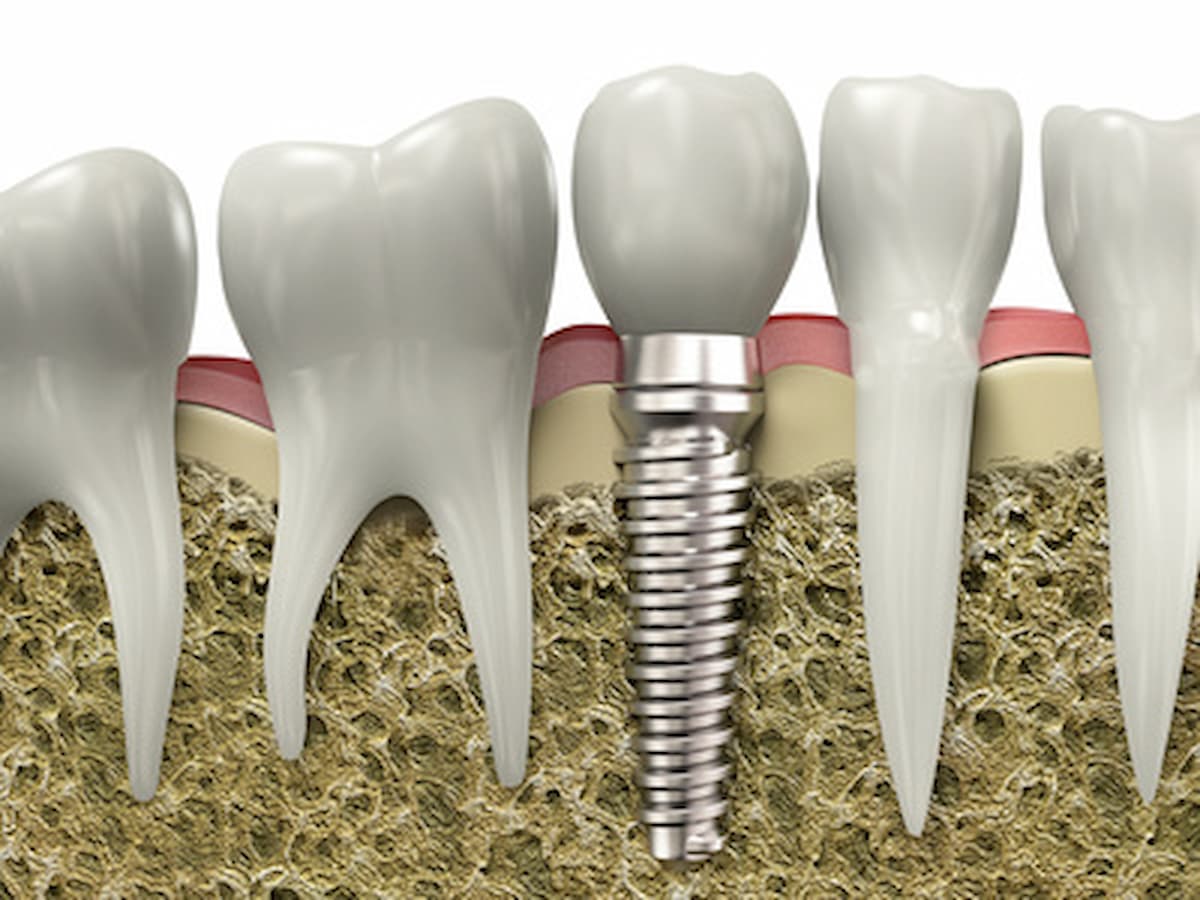
dental implant 3d rendering

You have a single tooth or multiple teeth missing, and you are frustrated. You don’t have the attractive smile you long for, and you also are having trouble with eating your favorite foods, such as pork chops or crisp Granny Smith apples. However, with a dental implant, you not only get a tooth-restoration option that looks like a real tooth: You get a replacement tooth that acts like one, too.

Dental implants contain three essential parts. The first is a titanium screw-like device, which is called the actual implant. Your dentist will place this titanium screw in your jawbone in the area that once held your natural tooth’s root. Over time, the implant fuses with the bone and acts like the root in that it rests securely in the bone, thus providing stability for your new tooth.

The second part of a dental implant is called the abutment piece, or a connecting piece that protrudes from the gum line. The abutment is used to support the third part of a dental implant—the crown. The crown is a cap that looks like a tooth and goes on top of the abutment and titanium screw. A crown mimics your own tooth because its color, size and shape closely resemble that of your remaining natural teeth.

Dental implants are the most effective tooth-replacement option because an implant is built to last long-term. When you are missing teeth, you may experience bone loss. However, the chewing forces applied to a dental implant when you eat food actually stimulate the bone, thus promoting new bone growth.

You may use a dental implant to replace a single tooth, or your dentist could place two or more dental implants, depending on how many teeth you are missing.  An implant can last a lifetime when cared for properly at home and during regular dental visits. Contact The Dental Place at 972-264-5795 today to learn whether you are a candidate for a dental implant, and enjoy the ability to both chew and smile naturally again.

How Do I Care for My Porcelain Veneers?

November 24, 2013

Veneers are thin, tooth-colored shells that are permanently cemented over teeth to repair many dental imperfections.

Teeth that are stained from hard to reach intrinsic stains or are discolored from years of medications taken, lifestyle choices, or just drab and discolored can be covered.

When teeth are malformed or enamel is worn, teeth can be made to appear symmetrical through dental veneers. 

Once veneers are completed, care is as simple as caring for your natural teeth.

Chipped or cracked teeth are repaired and often are stronger after veneers are cemented in place.

When spaces or gaps between teeth are unattractive, dental veneers can make the spaces appear to close.

A consultation with your cosmetic dentist will provide information to repair many dental challenges through the use of dental veneers. During this appointment, a treatment plan will be outlined and the patient will be advised of needed appointments as well as what care will be needed after treatment is rendered.

What makes porcelain ideal for this application? Porcelain is stain resistant and is well tolerated by gum tissue. Porcelain can be prepped to match the shape, size and color of the teeth being repaired making treated teeth virtually undetectable.

Before veneers are permanently affixed, they are “tried in” to guarantee they are a perfect match to surrounding teeth. Adjustments can be made, if needed.

When cementing the veneers in place, a small amount of dental enamel must be removed so treated teeth will appear natural in size and depth. The biological teeth are then coated with etch which roughs up the surface to aid in veneers adhering to teeth.

Once veneers are completed, care is as simple as caring for your natural teeth. Biting into hard objects like ice, candy, or objects like pens or biting fingernails can chip or break a porcelain veneer, so that is discouraged.

Daily flossing, brushing at least twice per day, and bi-annual visits to the dentist for a cleaning and exam will help keep both treated and untreated teeth healthy and bright for many years.

Will my tooth need special care after root canal therapy?

November 12, 2013

Root canal therapy, also known as endodontic therapy, is a procedure where the contents of the canals of the tooth’s root are removed. These include nerves, pulp, and blood tissues. A root canal is most often performed on a tooth that is infected in an effort to save the tooth.

When a root canal is performed, the dentist will take an x-ray to determine how many roots are involved and the position they are in to facilitate reaching all of the canals. Failure to ascertain and treat all canals can result in the need for re-treating the tooth to prevent infection advancement, possibly an abscess.

Once the x-ray is taken, the tooth is segregated by a rubber dam. This will keep the tooth dry and allow the dentist to remove the contents before they can be swallowed.

The tooth will be opened with the use of a drill to create access to the canals. A file is then used to penetrate the opening and will wrap the contents of the canals around the file for removal. After debris is removed, the area is flushed.

The condition of the tooth will dictate what happens next. If there is no infection present, the tooth may be filled with a rubbery substance called gutta percha. This will add stability to the tooth by filling the cavities. At this point the tooth must be sealed.

Depending on the location of the tooth treated, the opening may be sealed with a tooth colored filling made from composite resin, a plastic material that is placed in stages and cured with each placement.

For a molar tooth, the tooth is more likely to be sealed with a dental crown. Because a crown must be fabricated, immediate placement after a root canal is unlikely. In this case, a temporary covering is placed until the final restoration can be seated.

After the crown is cemented in place, the tooth is sealed and will not require any special care. A root canal will not alter the tooth as once a tooth has erupted, the contents of the canals are no longer essential.

Daily flossing and brushing will help keep all your teeth healthy.  Our dental team will provide instructions on how to floss properly after a crown has been placed. Call 972-264-5795 for more information today.

Dry Mouth and Cavities

November 3, 2013

Patients can have a dry mouth for many reasons. Some are temporary, perhaps as a result of an illness like a cold and medications you take that can dry up the sinuses and oral cavity. But if dry mouth is chronic, your dentist in Grand Prairie has suggestions that can bring you relief.

This dry mouth condition is known as xerostomia. Basically, the body lacks the ability to produce sufficient saliva for normal oral health. 

If dry mouth is chronic, your dentist has suggestions that can bring you relief.

When the mouth is dry, it provides ideal conditions for dental decay and gum disease to develop. Saliva is our own natural mouthwash which aids in keeping bacteria flushed from the mouth. Saliva also serves as one component in breaking down the enzymes that aid in digestion.

If dry mouth is a problem, there are a few options you can try:

  1. If dry mouth is attributed to medicines taken, a different medication might be prescribed or altering the dosage may help.
  2. If dry mouth is a result of chemotherapy or surgery; or merely the inability for glands to produce saliva, you can chew sugar free gum or suck on sugar free candy. The chewing and sucking actions may help to promote saliva production.
  3. Keeping water on hand and sipping it throughout the day and night will keep the mouth moist.
  4. For cavity protection, brushing a minimum of twice per day with a fluoridated tooth paste along with daily flossing are essential to maintain good dental health.
  5. Seeing the dentist every six months for cleaning and an exam will aid in reducing plaque build-up as well as monitoring problem areas before they can escalate into major repair.
  6. Avoid the things known to promote dental decay including sugary snacks and beverages; tobacco use; excessive alcohol or caffeine (alcohol and caffeine are known to promote dehydration).
  7. When the mouth is extremely dry, the ability to chew and swallow may be impeded. The diet should include moist foods and limit the intake of dry or salty products.

Other dental services in Grand Prairie could include asking Dr. Robert D. Maxey or Dr. Cecil F. George, Jr. to recommend one of the products over the counter that helps promote saliva production. Avoid mouthwashes that contain alcohol. If lips are also dry, a lip balm can provide relief.

Although a dry mouth is more aggravating than dangerous, relief is available.  Your dentist at The Dental Place is your best resource for finding a solution. Contact The Dental Place in Grand Prairie, TX today.

Tips for a Smooth Recovery After Wisdom Tooth Extraction

October 25, 2013

Just like any other kind of surgery, oral surgery requires diligent care for a successful recovery. If you’ve had a wisdom tooth extracted, you can take certain steps to be sure your recovery is as quick and easy as possible.

Caring for Your Mouth After an Extraction

After your wisdom tooth is extracted, you’ll have a “socket” left behind where the tooth once rested. This socket takes some time to heal. Since wisdom teeth are relatively large, you should take special care to be sure the socket is kept clean and that bleeding is kept under control. In some cases, your dentist might use stitches to close the socket, but this depends upon how large the tooth was and whether or not it was impacted.

Your dentist will provide instructions on how to care for your mouth after your surgery. Some steps to take to ensure a smooth recovery include:

•    Take medications as instructed, including antibiotics
•    Do not use a straw
•    Place an ice pack on your jaw to reduce swelling
•    Avoid smoking
•    Eat liquid or soft foods for the first few days

Following these instructions, as well as any instructions provided by your dentist, will help reduce discomfort, protect the healing area, and speed your recovery.

Avoiding Dry Socket

One complication that can develop after an extraction is called dry socket. The empty socket is protected by a clot that forms after the tooth is removed. This clot covers exposed nerves and bone in the jaw. If the clot is dislodged before healing is complete, the result is called dry socket.

Dry socket can be extremely uncomfortable and can slow the healing process. To prevent it from occurring, avoid drinking from a straw or touching the area where the tooth was removed. If you experience extreme discomfort when cold or hot water or even air touch the socket, be sure to see your dentist immediately for treatment.

For additional tips and to schedule your informative consultation, contact our skilled and dedicated dental team today. Call 972-264-5795 to schedule your visit.

Will I be Able to Eat with My New Dentures?

October 16, 2013

As with any change to a part of your body, dentures can take a period of adjustment before a comfort level is achieved.

A denture is used to replace lost permanent teeth. A partial denture replaces several teeth while a complete denture is employed for a missing upper or lower arch. When consulting with your dentist about dentures, there are several considerations:

  • Fixed or removable – If a removable denture is your choice, there are options available as to the attachment mechanism used. A fixed denture is permanent, and if the teeth that abut the area to be treated are healthy, this may be the most desired option. That is because there are no concerns about a fixed denture slipping when speaking, smiling or eating.
  • Immediate or conventional – An immediate denture is prepared prior to having teeth removed. There are no temporaries to deal with as the final denture is placed immediately following extraction. A conventional denture is placed after healing has taken place.

Eating with dentures can take a little practice, especially depending on the type of denture you have selected. Many patients are tempted to remove their denture initially when eating; however this will make it difficult to learn how to eat with it in place.

Ideally, leaving the denture in place and selecting soft foods is best at first. When learning to eat more solid foods, smaller bites and chewing on both sides will expedite the comfort level. Caution is to be exercised when eating and drinking hot items as the senses may need a period of adjustment as well.

During the first couple of weeks of learning to live with your new denture, you may experience temporary discomfort as you adjust. Your denture has been customized specifically for you, but do not hesitate to contact your dentist if sores develop or your denture feels like it is slipping.

Do not make the mistake of trying to make adjustments to your denture on your own. If your new denture is experiencing movement you may be tempted to make a few minor tweaks on your own to eliminate a trip for adjustment, but it is ill advised. Your dentist made this denture for your comfort and function, so allow for needed adjustments.

If you are considering dentures as a tooth replacement solution, contact our experienced team at The Dental Place and schedule your personal consultation today.

Why Can’t Children Get Dental Implants?

October 3, 2013

Why Can’t Children Get Dental Implants

Dental implants describe a procedure where a metal device is surgically imbedded in gum tissue where a permanent tooth has been lost as a means to provide a solid base for a crown, implant supported bridge, or total replacement of the upper and/or lower arch.

A patient should have attained bone maturity before considering dental implants. That is because once the implant has been placed, it is critical that bone fuse to the implant exactly where it has been placed. In a child, bones in the jaw are still growing making it very difficult for the implant to remain stable.

Why is this stability so important? Think about the root of a natural tooth. If the root is displaced because of jaw bone growth, the tooth attached to it would also shift. Teeth shifting can create a malocclusion, a condition where the upper teeth do not properly align with the bottom. This can result in any number of problems from bite issues to teeth ultimately requiring straightening.

A dental implant is intended to function like that of the root of a biological tooth. That is to provide stability for the tooth it supports. The canals or interior of the teeth’s roots also contain blood, pulp and nerve tissue, but these do not have a role in the function of the root of the tooth so their absence with dental implants is not a factor.

With a child still experiencing bone growth, dental implants are impractical, and can actually do harm for future bone growth. When a younger adolescent or teenager loses a permanent tooth, there are options that are temporary that provide cosmetic relief. A flipper, which is used to replace one tooth, is probably the choice most patients make until achieving bone maturity when an implant can be placed.

There have been documented cases where implants were placed in children. Usually in cases like this, the child has failed to develop one or all teeth, and implants are a better option than a denture for a child. There is a possibility that the implants and their restorations may need to be replaced when the child becomes an adult.

A consultation with our dental team will provide the best options for teeth replacement for a child or adult. With the many options available, smile improvements are very attainable. Call 972-264-5795 to learn more.

Root Canal Treatment: Why does tooth pulp need to be removed?

September 25, 2013

When a patient has a severe toothache or is experiencing sensitivity, it is likely the tooth’s enamel has been breached. In some instances, the tooth may be decayed and a filling is the prescribed treatment. However, if infection is present, the patient is likely going to need a root canal.

A root canal, also known as endodontic therapy, is a procedure where the canals of the infected tooth are opened and the contents of the canal are removed. This is done by creating a small opening in the tooth and entering the canal. After accessing the canal, another instrument called a file is used. Of course, this is a simplistic explanation … there are more steps needed. 

The whole purpose for undergoing a root canal is to save a viable tooth.

The file literally spins the contents in the canal around the device until everything can be removed. The canal consists of pulp, nerve tissue, and sometimes infectious material. After each canal is treated, the area is flushed to remove any remaining matter. If the tooth is to be sealed right away, the canal is filled with a rubbery substance called gutta percha. This provides stability for the tooth.

Each canal of the infected tooth must be treated. If a canal is missed or all infection is not removed, the patient may develop an abscess. An x-ray is taken prior to starting the root canal to verify the number of roots that need to be treated.

Sealing the tooth following root canal therapy can be done with a filling, but for a tooth that has been subjected to earlier repair, the likely restoration will be in the form of a crown.

The whole purpose for undergoing a root canal is to save a viable tooth. Once a tooth has erupted, the nerve serves no useful purpose. Removing the nerve and pulp of the tooth will not cause the tooth to “die”. The tooth will not become shriveled or fall out. In fact, once the treated tooth has been sealed, it will not look or feel any different than before.

Without root canal therapy, the patient is often faced with extraction to resolve the problem. Since keeping our natural teeth is always a better solution than the alternative, a root canal should be performed if recommended by your dentist in grand prairie.