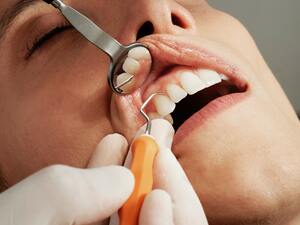
Your wisdom teeth, also known as the third molars, are the final set of teeth that arrive in your mouth. For certain patients, when they begin to enter, they can cause unfortunate problems by shifting existing teeth and potentially damaging their oral health. This is because your jaw may not have the room required to hold an entirely new set of molars without pressing against the others. In addition to pain and damage to your enamel, this pressure can throw off your dental alignment and impact your entire smile’s appearance.
At your Grand Prairie, TX, dentist’s office, we can help you keep your smile straight by performing your wisdom teeth removal before they create problems in your mouth. By tracking their arrival at routine dental visits, we can alert you when it is time to remove them before they erupt and injure their neighbors. Being proactive means you do not have to wait until you experience painful symptoms to address this common oral health scenario.
If your teeth look dull or discolored, it can be hard to feel happy with your overall appearance. After all, your smile can be one of the first things people notice about you. If it appears stained, it can make you seem less healthy, older, and generally less attractive. Addressing the problem can lead to a welcome boost in confidence. While doing so on your own can prove difficult, you can find that your Grand Prairie, TX dentist’s office is prepared to help! Our practice offers the Opalescence teeth whitening system, which includes stronger bleaching agents than over the counter alternatives and custom-made oral trays for application.
Doubts about your smile can have a significant effect on your confidence. It can become difficult for you to make the right first impression, you can find it hard to smile for photos, and you can grow self-conscious about your overall appearance. Part of what frustrates people with smile flaws is how hard they are to hide. The good news is that whatever problem holds you back from smiling with confidence can be addressed with cosmetic treatment. Our Grand Prairie, TX dental office can recommend treatment with porcelain veneers to address your doubts about the way you look. With these slender restorations, we can take on several problems at one time, giving you noteworthy and lasting changes to enjoy!
Teeth cleaning by a professional might seem daunting, especially when you see the variety of tools they use. But rest assured, your prophy appointment, also known as a prophylaxis appointment, is just about cleaning your teeth and preserving your oral health. It’s not a painful process and will help to reduce your risks for gum disease and tooth decay. Here’s what you can expect during your routine cleaning or prophy appointments.
Update Your Medical History
The first step isn’t the cleaning itself. Instead, your dental hygienist updates your medical history. You should always inform them of any changes, including allergies, new medications, or recent diagnoses. These can affect your mouth’s health, as well, and may need to be considered should you require additional oral health treatments.
Examine Your Gum Health
The next step during this appointment is to measure your gum tissue to check for signs of gum disease. A periodontal probing tool measures the precise depth of the tissue to ensure it’s not pulling away from the teeth.
You may also have X-rays taken, which may only be needed annually and not during every appointment.
Teeth Cleaning
When you see the cleaning tools, especially those with sharp picks on the ends, you might worry about whether the cleaning will hurt. However, rest easy. While you might feel some pressure, your dental hygienist is trained to clean your teeth without hurting you.
During the roughly one-hour prophy appointment, your teeth are brushed with an ultrasonic brush and flossed thoroughly. Then, your teeth are polished to remove softer plaque buildup and stains.
After these steps, it’s time to remove stubborn tartar. Tartar is incredibly hard and requires your hygienist to pick and scrape it off your teeth. It can only be removed by a professional. During this process, your hygienist looks for any signs of decay or gum disease to let the dentist know of potential problem areas.
Final Dentist Inspection
After the teeth cleaning process is finished, your dentist examines your teeth again. They’ll look for any possible problems, including cavities and early signs of gum disease. You’ll get personalized recommendations for how to continue caring for your teeth.
If any issues are found, you’ll discuss them with the dentist and likely make a follow-up appointment. You can also discuss any questions you might have.
Determining Frequency
While the standard recommendation is twice a year, your dentist might recommend coming in more frequently if you’re prone to faster plaque and tartar buildup. Genetics, smoking, medical conditions, medications, and improper brushing and flossing can all contribute to this. Just remember, teeth cleaning doesn’t hurt and helps prevent issues that could result in oral pain.
Dental bonding is a great way to improve the appearance of chipped, worn, or damaged teeth. It can even be used to cover exposed roots. But tooth bonding isn’t a permanent solution. How long bonding lasts depends on several factors.
How Long Does Dental Bonding Last on Average?
The average lifespan of bonding is anywhere from three to ten years. While that’s a wide range, the duration primarily depends on how well you care for your teeth after the bonding process is complete. You might need to change a few habits to avoid damaging the bonding material prematurely. The good news is as long as you continue taking good care of your teeth, bonding can be replaced.
What Should I Avoid Doing?
While bonding might make your teeth look perfectly normal, it’s not quite as durable as your teeth. This means making a few changes, such as:
Don’t use your teeth as a tool to open packages.
Avoid biting down on overly hard foods, such as hard candies and apples (cut them up instead.)
Stop biting your nails.
Avoid grinding your teeth.
Limit acidic and sugary foods.
Limit foods known to stain (bonding materials stain faster than teeth.)
Teeth grinding, or bruxism, is a common cause of worn-down teeth. While you might be able to stop the habit during the day, sleep bruxism is more difficult to resolve. If you’re regularly grinding your teeth, talk to your dentist and doctor for solutions, such as medications and mouth guards.
How Can I Make Bonding Last Longer?
Dental bonding will eventually wear off, but you can make it last as long as possible by brushing twice daily and flossing once per day. Then, of course, see your dentist at least twice yearly for regular cleanings and to check your bonding.
Usually, bonding on your front teeth wears out sooner, especially since it may stain quicker and you bite more with your front teeth. Outside of staining, be mindful of how it feels when you bite down to ensure nothing has come loose. If something doesn’t feel right, call your dentist immediately.
Another option is to think about getting veneers. These last longer, about seven to 15 years, but they do cost more. However, you’ll want to take the same precautions with veneers to make them last as long as possible.
Want to learn more about dental bonding and whether it’s the right choice for you? Contact The Dental Place today to make an appointment.
If you’ve considered cosmetic dentistry, you’ve probably wondered about veneers. More specifically, you want to know how long veneers last before deciding. With so many celebrities getting them for perfect smiles, it might seem like the ideal solution for gaps, damaged teeth, severe stains, and more. But veneers aren’t permanent. And there’s more to know.
Material Matters
There are three main options for veneers – porcelain, composite, and no-prep. Composite uses a resin that doesn’t usually last as long as other materials. No-prep may not last as long either and isn’t recommended for those with more severe dental issues, especially stains or damage. For these reasons, most dentists suggest porcelain varieties to their patients. Porcelain materials tend to have the longest life with proper care, hide a wide variety of issues, and match your natural teeth the best.
How Long Can Your Veneers Last?
While everything depends on how you care for your veneers, the average porcelain variety lasts approximately ten years, though another study found they may last as long as 20 years. Since some enamel is removed from your tooth to place the veneer, you will need to have them replaced as they wear out over time. Your dentist will check yours each visit to see how well they’re holding up.
The greatest benefit of veneers is preventing any current damage to a tooth from worsening. But, of course, it’s still susceptible to plaque, bacteria, and cavities, just like any other tooth. So, proper oral hygiene is still important.
Extending the Life of Your Veneers
Veneers are an excellent investment in your smile, and by following a few simple rules, they could last you well over a decade.
Most importantly, continue to brush and floss regularly. This isn’t just critical for maintaining your veneers but also your surrounding teeth. Additionally, visit your dentist regularly for cleanings and to check the health and durability of the materials.
Keep your veneers in great condition by not grinding your teeth. While durable, they aren’t indestructible. Grinding your teeth removes the surface of a veneer just like a natural tooth. If you have trouble with this, ask your dentist about a mouth guard to wear while sleeping. Then, during the day, be mindful of your teeth until you’re able to break the grinding habit.
Don’t use your teeth to open products either, such as bags, plastic shell packs, or twist-off caps. Non-edible materials aren’t good for your teeth, especially not veneers. Also, skip out on biting down on hard foods, such as ice or candy.
Want to find out if veneer-based solutions are right for you? Learn more about our porcelain veneers, and feel free to ask us any questions about how they can improve your smile!
The journey to becoming a dentist is highly rewarding, especially when you finish dental school and start seeing your patients’ smiling faces. However, to join the ranks of oral health experts worldwide, you will need to undergo several courses and, of course, choose your specialty.
Before Entering Dental School
Before applying to a dental program, you’ll start with four years of undergraduate college with a heavy focus on science, chemistry, biology, and more. The ADA recommends joining the ASDA (American Student Dental Association) to better prepare yourself in high school and college on what to expect and what courses to take.
You should work closely with your college advisor or counselor to create a curriculum that meets all dental school prerequisites. A science degree is usually the best option. During your junior year, you should take the Dental Admissions Test (DAT) before applying to dental school. Successful applicants usually have a high GPA and great recommendation letters.
Four More Years
You’ll usually need to attend college for four more years to become a dentist. This takes you from undergraduate to graduate. During this time, you’ll have a more intense curriculum covering everything from immunology to health care policy. So, naturally, your courses will fully cover everything to do with oral health as well. This Harvard curriculum gives you an idea of what to expect.
By the time you graduate, you should be fully prepared to take your licensure exams.
Take Your Exams
Even after completing college, you have one more step – licensure. This process varies by state, but at the minimum, you’ll have to pass written and clinical exams and meet all educational requirements.
Once licensed, you can join an existing dental practice or start your own. All of the above have prepared you to become a general dentist, the type of dentist usually provides your regular checkups and routine oral care. However, if you want to be a specialist, which might include niche oral health services like orthodontics or periodontics, you’ll need even more education.
How Long Can It Take To Officially Become a Dentist?
Counting your undergraduate program, it takes at least eight years to become a dentist. If you decide to specialize in a particular oral health field, you may need 2-3 more years of education and clinical training. Specialty studies will vary, too, and include occupations like orthodontist, pediatric dentistry, and periodontist. The ADA officially recognizes 12 specialties, so you have plenty of options to explore.
If you’re curious about Dr. Robert Maxey’s journey to becoming a dentist, check out his bio now. And don’t hesitate to connect and ask him questions if you’re considering going to dental school.
If you admire a person’s beautiful smile full of perfectly shaped, white teeth, you may be looking at dental veneers.
What are veneers?
Veneers are thin, tooth-colored shells bonded to the front of teeth to improve their appearance. They are a popular solution for chipped and discolored teeth.
Below, we will look at the types of veneers, learn about proper care, and discuss cost.
Types of Veneers
Porcelain Veneers
Porcelain veneers are the most popular due to their quality and longevity. They are more robust and less likely to stain. However, the process can take longer, and dentists usually grind away a good portion of the tooth enamel before attaching them.
Some offices can fabricate porcelain veneers on-site, but if not, you will have to wait for them to be made at a lab. Once they are ready, your dentist will clean your teeth to remove any harmful bacteria. Then, a grinding tool creates a rough surface on the tooth, which helps the dental cement create a strong bond between the veneer and the tooth.
Composite Resin Veneers
Composite resin veneers don’t require as much of the tooth to be removed since layers of composite material are applied to the teeth and shaped. Once the desired look is achieved, it is cured and hardened with a special light.
This procedure can be done in a single day, and composite veneers are easier to fix. However, they can also be damaged more easily and only last five to seven years.
Proper Care of Veneers
Veneers can chip if you bite on hard objects like ice. Be sure to practice good daily habits such as brushing and flossing. Cavities can still form under and around veneers. Try using a dental guard if you clench or grind your teeth at night.
Cost of Veneers
Because veneers are cosmetic, many insurance plans don’t cover them. One porcelain veneer can range from $925 to $2,500. Composite resin veneers cost from $400 to $2,000 per tooth.
Factors affecting the cost include the type of veneer, brand, dentist’s expertise, and area’s cost of living.
Conclusion
Have you ever wondered, “What are veneers?” Dental veneers are an excellent solution for improving a less-than-stellar smile. They cover discoloration, gaps, and chips.
The procedure is permanent and can be costly, so it’s important to be sure of your decision. When you’re ready, veneers can transform your appearance and your life.
For questions or to schedule an appointment, give The Dental Place a call! We’ll help you determine if dental veneers are right for you!
Ahh, the dentist’s office — the place people love to hate for many reasons. It’s easy to tell ourselves that we are fine, and we don’t need someone poking in our mouths. But in reality, our teeth are an important part of our well-being and our appearance. Keep reading to learn more about the 5 reasons why you need to see a dentist regularly.
1. Prevent Tooth Decay
One of the top reasons to see a dentist is to prevent tooth decay. The foods and drinks we consume mix with bacteria in our mouths and leave behind residue on our teeth called plaque.
When plaque hardens, it turns into tartar that can lead to the breakdown of tooth enamel as well as gum disease. Food that gets caught in crevices can cause cavities that can eventually destroy the entire tooth. Regular cleanings remove the plaque and tartar and prevent more serious problems.
2. Oral Cancer Screening
With the rise of oral cancer, screenings have become standard procedures in most dental offices. Your dentist will examine your mouth for any signs of it, and if he sees any, he will recommend immediate action.
3. X-Rays
Most dentists take X-rays once a year to make sure there are no issues brewing beneath the surface. They can spot developing cavities and infections and take steps to minimize the damage. A customized treatment plan will be created for the most effective solution.
4. Improve Your Oral Hygiene
Think you know everything there is to know about flossing and brushing? Even if you’ve been taking care of your teeth for thirty years, there may be a new tip or technique that will improve your oral hygiene. Dentists and hygienists are happy to share their knowledge so that you can better take care of yourself.
5. Get a New Smile
If you’re self-conscious about stained or crooked teeth, your dentist can help you devise a plan to get the smile you want. Whether it’s teeth whitening or veneers, they will be able to help you feel happy and confident when you look in the mirror.
Conclusion
Even though it’s tempting to put off your dentist appointment indefinitely, it can be critical to your well-being to make the time for regular checkups and exams. From preventing tooth decay to X-rays to improving your smile, we have looked at 5 reasons why you need to see the dentist. Making an appointment now could save you from more serious health problems down the road.
Don’t wait! Contact us here to make your next appointment.
The Dental Place in Grand Prairie, Texas, has helped numerous patients achieve the important goal of looking and feeling good. A healthy and radiant smile is possible with our dental services.
One of our many services includes helping patients improve their smiles with dental implants. Dental implants are used to replace missing or lost teeth. So, how do they work? How does an artificial replacement work with the current anatomy of the teeth?
Teeth are positioned in the mouth based on the gums and jawline. This breaks down into two parts:
The Crown—This is the part of the tooth that is exposed above the gum line.
The Root—This is the section of the tooth that is positioned below the gum line that anchors into your jaw.
When a patient gets dental implants, the artificial replacement needs to fit in the jawline naturally. In order to do this, the dental implant is made up of three main parts: the fixture, the abutment, and the dental prosthetic. The fixture helps the dental plant anchor in the root.
The fixture, which is a small, cylindrical screw, is placed into the jawbone to act as a tooth root. The fixture mimics the function of natural tooth roots, which is the section of the tooth that is positioned below the gum line.
The abutment is a small piece that acts as a connector between the fixture and the dental prosthetic. One side screws into the fixture and the other side keep the dental prosthetic secure.
Once secure, the dental prosthetic acts as the crown. The crown, which is every part of the tooth that is exposed above the gum line, has multiple layers. The layers include enamel, dentin, and pulp. Since the dental prosthetic is artificial, it does not have these layers but still requires proper care and maintenance.
Schedule an Appointment
At The Dental Place in Grand Prairie, Texas, our knowledgeable and friendly staff are here to assist patients with all matters related to dental care. Dr. Maxey is ready to help any and all patients considering dental implants with the process.
Schedule an appointment with The Dental Place
to get one step closer to a brighter and healthier smile.
Content found on this blog is intended for educational purposes only and should not be used as a substitute for professional judgement, advice, diagnosis, or treatment. Please speak with a professional if you have concerns about your oral health.

 Request an Appointment
 If your
  Doubts about your smile can have a significant effect on your confidence. It can become difficult for you to make the right first impression, you can find it hard to smile for photos, and you can grow self-conscious about your overall appearance. Part of what frustrates people with smile flaws is how hard they are to hide. The good news is that whatever problem holds you back from smiling with confidence can be addressed with cosmetic treatment.